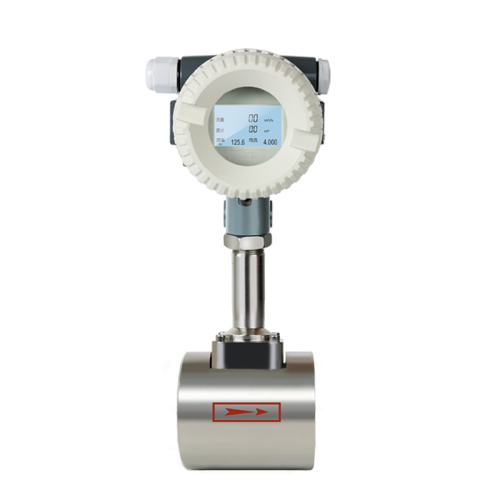


YUNYI gas roots flow meter
Precision Measurement, Steady as a Rock — The Authoritative Choice for Gas Trade Settlement
YUNYI Roots flowmeter (also known as a rotary vane flowmeter) is a high-precision gas flow instrument based on the volumetric measurement principle. Its core consists of a pair of precision-machined “8”-shaped Roots (rotary vane) rotors that rotate in opposite directions within the measuring chamber, driven by the flowing gas. With each complete rotation, the rotors expel four fixed-volume “gas chambers,” enabling highly accurate, continuous measurement of gas volume. Thanks to its unmatched precision, repeatability, and long-term stability, it has become the preferred standard and legal metrology instrument for trade settlement in sectors such as city gas and natural gas transmission and distribution.

Product Advantages
The core value of Roots flow meters lies in their extreme precision, rugged durability, and exceptionally long service life—all engineered for trade fairness.
1. Trade-grade ultra-high accuracy: Achieves accuracy ratings as high as ±1.0%, maintaining exceptional measurement precision across an extremely wide flow range (wide turndown ratio). This minimizes trade disputes and ensures fairness for both buyers and sellers.
2. Ultra-Low Start-Up Flow & Wide Turndown Ratio: Exceptionally sensitive to minute flows with minimal start-up flow requirements. Achieves a turndown ratio up to 1:100 or higher, precisely measuring variations from minimal to maximum flow rates. Effectively prevents “unaccounted-for gas” losses from leaks, spills, or drips.
3. Exceptional repeatability and long-term stability: Repeatability error better than ±0.2%. Robust mechanical construction ensures high long-term operational stability with extended calibration intervals (typically 6-8 years), resulting in lower total cost of ownership (TCO) over the product lifecycle.
4. Direct-reading volumetric measurement with high reliability: Based on mechanical volumetric principles, measurement results remain unaffected by gas composition or density variations (requires temperature/pressure compensation for standard conditions). Outputs pulse signals with strong electromagnetic interference resistance, ensuring data reliability.
5. Integrated intelligent temperature/pressure compensation: Built-in high-precision temperature and pressure sensors directly output volumetric flow at standard conditions (20°C, 101.325 kPa). High integration eliminates external transmitters and reduces installation costs.
6. Rugged and durable with simple maintenance: Constructed with high-strength aluminum alloy or cast iron housing and precision bearing system, designed for over 20 years of service life. Washable filter screens and replaceable lubricating oil enable extended maintenance intervals and straightforward operation.
Core Application Areas
✅ Urban Gas Trade Settlement: Trade metering for gas gate stations, transmission and distribution networks, large industrial users, and commercial users (compliant with the highest standards including GB/T 18603 and EN12261).
✅ Natural Gas Development and Utilization: Wellhead natural gas metering, CNG/LNG refueling stations, and furnace gas metering for gas-fired power plants.
✅ Industrial Gas Measurement: Cost accounting and energy management for high-pressure gases including compressed air (CFA), nitrogen (N₂), and coal gas.
✅ Pressure Regulation and Metering Stations: Core metering instruments for regional pipeline networks, enabling flow allocation and settlement.
✅ Testing and Calibration: Serving as reference standards for online live-flow calibration of other gas flowmeter types.
| City Gas / Natural Gas | Gas gate stations, commercial and industrial customers (hotels, factories, boilers) for natural gas custody transfer and consumption monitoring | 1. Custody transfer accuracy – typically ±1.0% or ±1.5%, meeting the requirements for fair billing between gas utilities and end‑users. 2. Wide turndown ratio – up to 1:20 or more, accommodating large fluctuations in consumption (e.g., peak vs. off‑peak) common in commercial and industrial settings. 3. Low starting flow – accurately measures small flows, preventing “under‑recording” during low‑demand periods such as nights. |
| Industrial Gas Measurement | Compressed air, nitrogen, oxygen, carbon dioxide, argon, and other industrial gases in distribution and monitoring systems | 1. Stable measurement – as a positive‑displacement meter, its accuracy is unaffected by pressure or temperature variations in the piping network. 2. Suitable for low‑to‑medium pressures – typical operating range is 0.1–1.6 MPa, fitting most industrial gas distribution systems. 3. Material compatibility – bearings and seals can be selected for special gases (e.g., oxygen‑compatible materials for oxygen service to ensure oil‑free conditions). |
| Environmental & Energy | Biogas, coalbed methane, flare gas, biomass gas – recovery and measurement of non‑conventional gases | 1. Customizable materials – special coatings or materials can be used to handle minor impurities or mildly corrosive gases, improving wear and corrosion resistance. 2. High‑accuracy recovery metering – precise measurement directly impacts economic returns in applications like associated gas recovery. |
| Laboratory & Calibration | Reference meters for gas meter test benches, laboratory gas flow test stands | 1. Excellent repeatability – typically better than ±0.2%, making them suitable as transfer standards for ensuring traceability. 2. High accuracy – can serve as reference meters for calibrating other types of gas flowmeters. |
Technical Specifications
1. Accuracy Class: ±1.0% (Trade-grade)
2. Turndown Ratio (Qmax:Qmin): 1:100 or higher
3. Nominal Diameter (DN): DN25, DN40, DN50, DN80, DN100, DN150, DN200
4. Maximum Working Pressure: PN16 (1.6MPa), PN25 (2.5MPa) or higher (e.g., 4.0MPa)
5. Repeatability: ≤ ±0.2%
6. Output Signal: Mechanical counter (direct reading), three-wire voltage pulse, 4-20mA, RS485 (Modbus)
7. Smart Features: Built-in temperature/pressure compensation, IC card control, data storage, GPRS remote transmission (optional)
8. Materials: Housing: High-strength aluminum alloy/cast iron; Rotor: High-strength aluminum alloy; Bearings: Precision long-life bearings
9. Installation: Horizontal (standard), Vertical (optional)
10. Protection Rating: IP65
Q1: What is a Gas Roots Flow Meter, and where is it primarily used?
A: A Gas Roots flow meter is a high-precision, positive displacement instrument specifically engineered for measuring the volumetric flow of clean gases. It operates on the principle of two meshing rotors displacing fixed gas volumes. Known as a “Gas Fiscal Meter,” it is the gold standard for applications requiring unmatched accuracy and repeatability in custody transfer, natural gas distribution, process gas monitoring, and industrial gas consumption billing.
Q2: How does a Gas Roots Meter achieve such high accuracy and repeatability?
A:
-
Precise Gas Displacement: Two synchronized, precision-machined rotors trap and displace a fixed volume of gas with each rotation. This direct mechanical measurement is inherently accurate.
-
Minimal Internal Leakage (Slippage): The ultra-close clearance between rotors and the chamber minimizes gas slippage, especially at lower flow rates, ensuring superior accuracy across a wide range.
-
Direct Mechanical Drive & Pulse Output: Rotor movement is magnetically coupled to an index, generating a highly repeatable pulse signal directly proportional to the actual gas volume passed.
✅ Key Performance: Typical accuracy is ±1.0% or better, with exceptional repeatability of ±0.1%. Its performance is less affected by upstream flow disturbances compared to other meter types.
Q3: Which gas applications and industries are ideal for this meter?
A:
-
Primary Industries: Natural Gas Transmission & Distribution, City Gate Stations, LNG Facilities, Petrochemical & Refining, Industrial Gas Production (O2, N2, Ar), Biogas, and Coke Oven Gas.
-
Ideal Gas Types:
-
Natural Gas (including CNG)
-
Inert & Industrial Gases (Nitrogen, Argon, Oxygen)
-
Air, Biogas, and other non-aggressive, clean gases.
⚠️ Critical Note: The gas must be clean, dry, and non-lubricating. A filter/separator upstream is mandatory to protect the meter from particulates or liquid carryover that can cause damage.
-
Q4: Why choose a Roots meter over other gas flow technologies like turbine or ultrasonic?
A:
| Aspect | Gas Roots Meter | Gas Turbine Meter | Ultrasonic Meter |
|---|---|---|---|
| Accuracy | Excellent, especially at low to mid flows | Good at high flows, degrades at low flow | Very good, but can vary with gas composition |
| Turndown Ratio (Rangeability) | Very Wide (up to 1:100 or more) | Moderate | Wide |
| Moving Parts | Yes (rotors in non-contact motion) | Yes (high-speed rotor) | No |
| Upstream Pipe Requirements | Minimal (often ≤5D) | Requires long straight runs (10-20D) | Requires specific installation per model |
| Proven Custody Transfer Use | Extensive, long-standing history | Common | Growing, but newer technology |
| ▶ Conclusion: For custody transfer of natural gas and other high-value gases where maximum measurement certainty, wide rangeability, and proven reliability are paramount, Roots meters are often the preferred choice. |
Q5: What is “Smart” or “Corrected” Gas Volume, and how do these meters provide it?
A:
-
The Challenge: A Roots meter measures actual volumetric flow (ACF – Actual Cubic Feet/m³). However, gas volume contracts and expands with pressure and temperature. For fair billing and process control, flow must be converted to a standard reference condition (SCF – Standard Cubic Feet/m³).
-
The Smart Solution: Modern electronic Roots meters integrate temperature and pressure (T&P) sensors.
-
The Output: An associated flow computer (or integral corrector) uses the pulse signal and real-time T&P data to calculate and output the corrected standard volume using industry-standard equations (AGA, etc.). This is the critical value for custody transfer.
Q6: What are the key factors for selecting and installing a Gas Roots Meter?
A:
Selection Factors:
-
Flow Range: Define minimum, normal, and maximum flow rates (in ACFH or ACMH). Select a meter size where normal flow falls within its optimal range.
-
Operating Conditions: Gas composition, maximum/minimum pressure and temperature.
-
Pressure Rating: Match the meter’s ANSI/ASME pressure class to your line pressure.
-
Materials: Standard housings are ductile iron or aluminum. Stainless steel is available for corrosive environments.
-
Output & Connectivity: Pulse and 4-20mA for rate, plus RS485/Modbus for direct corrected volume and diagnostics.
Installation Best Practices:
-
Essential: Install a high-efficiency filter/coalescer upstream.
-
Orientation: Typically horizontal, but follow manufacturer guidelines.
-
Piping: Requires minimal straight pipe (typically 3-5 pipe diameters upstream, 0-3 downstream).
-
Calibration: Must be flow-calibrated with air or nitrogen traceable to a national standard. Calibration factors are loaded into the flow computer.
Q7: What certifications and approvals are critical for gas custody transfer?
A: These meters must meet stringent legal-for-trade standards:
-
OIML R137: International recommendation for gas meters.
-
EU Measuring Instruments Directive (MID): For trade within Europe.
-
AGA Report #6: (North America) Defines measurement methods for natural gas.
-
ATEX / IECEx: For use in hazardous (explosive) atmospheres.
-
PED / CRN: Pressure equipment directives for safety.
Q8: How is long-term reliability and maintenance managed?
A:
-
Robust Design: Simple mechanical principle with rugged construction leads to long service life (often 15+ years).
-
Predictable Maintenance: Maintenance primarily involves periodic filter element changes and verification of calibration.
-
Diagnostics: Advanced electronic indexers provide diagnostic data (like bearing monitoring) to enable predictive maintenance.
-
Recalibration: Recommended on a 5-10 year cycle or as required by regulation or process changes.