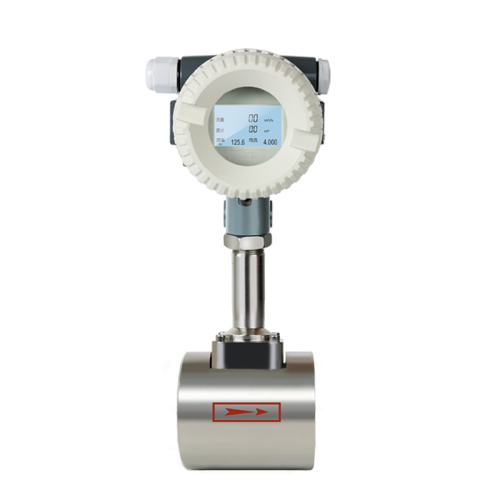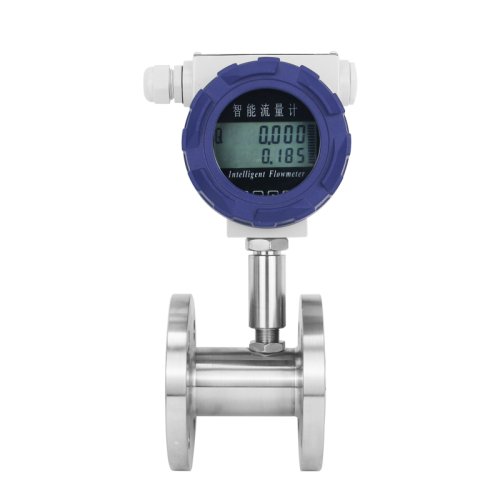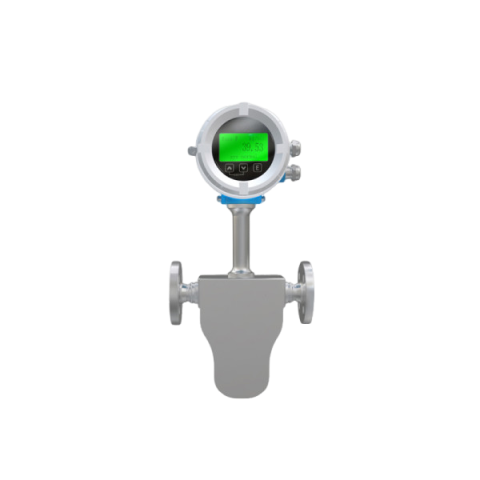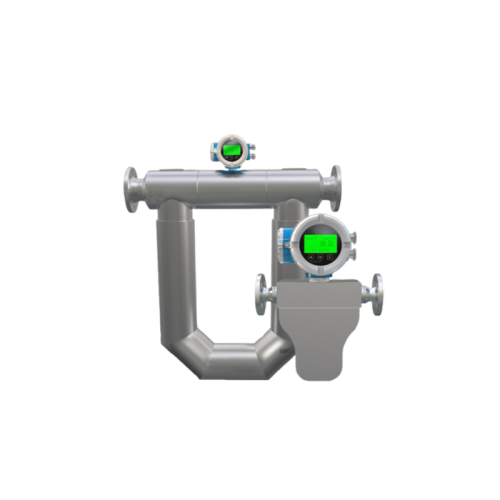


YUNYI oval gear flow meter
Precision in Every Gear · Mastering the Measure of Challenges — Experts in High-Viscosity Fluid Metering
YUNYI gear flowmeter is a classic positive displacement flowmeter. Its operating principle involves a pair of precision-machined elliptical or circular gears (hereafter referred to as gear wheels) meshing and rotating within a metering chamber. This creates fixed, sealed cavities that measure fluid volume in discrete increments. Each complete rotation of the gears discharges a fixed volume of fluid. By detecting the number of gear rotations, the cumulative and instantaneous flow rates of the fluid can be precisely calculated. This makes it an ideal choice for measuring high-viscosity, high-pressure fluids requiring high accuracy, particularly excelling in challenging operating conditions where other flow meters fall short.

Product Advantages
The core value of the bevel gear flowmeter lies in its unmatched high precision, adaptability to high-viscosity media, and extensive reliability.
1. Exceptional Measurement Accuracy: Employing volumetric measurement principles, it achieves accuracy as high as ±0.5% R or even ±0.2% R, ranking among the most precise flowmeters. This enables direct use for trade settlement, minimizing disputes and losses.
2. The King of High-Viscosity Measurement: Measurement accuracy remains unaffected by changes in fluid viscosity (even at high viscosities). Higher viscosity reduces internal leakage, enhancing measurement precision and perfectly solving the challenge of metering high-viscosity fluids.
3. No Straight Pipe Requirements: Accuracy remains unaffected by velocity distribution, eliminating near-total dependency on upstream/downstream straight pipe sections. This enables flexible installation, saves space, and is particularly suited for equipment with limited installation areas.
4. Wide Turndown Ratio: Typical turndown ratios reach 10:1 or 20:1, maintaining high precision across an extensive flow range. This satisfies measurement needs from minimal flow rates to full-load flow conditions.
5. High-Pressure Compatibility: Its robust mechanical design withstands extremely high pipeline pressures (up to tens of MPa), making it suitable for high-pressure injection, reactor feed, and similar applications.
6. Multiple Signal Outputs: Supports pulse signals (for high-precision measurement and quantitative control) and 4-20mA analog signals (for remote transmission and DCS/PLC system integration), along with protocols like HART.
Core Application Areas
✅ Petrochemical Industry: Trade transfer and process control for high-viscosity media such as crude oil, fuel oil, lubricants, asphalt, and resins.
✅ Food and Beverage Industry: Sanitary-grade quantitative filling and ingredient dispensing for chocolate, syrups, edible oils, honey, dairy products, fruit juices, etc.
✅ Chemical and Coatings Industry: High-precision metering and batch processing of solvents, paints, inks, adhesives, chemical raw materials, etc.
✅ Pharmaceutical Industry: Accurate addition and transfer of pharmaceutical solutions, glycerin, culture media, and other materials.
✅ Precision Industry: Used in laboratories, R&D centers, or as a standard meter for online calibration of other flow meters.
| Lubrication & Hydraulics | Lubricating oil, hydraulic oil, gear oil, turbine oil – addition, blending, and consumption monitoring | 1. High‑viscosity capability – excels at measuring high‑viscosity liquids (up to hundreds of cSt) with minimal accuracy loss across viscosity variations. 2. High pressure rating – typically withstands system pressures from several MPa up to tens of MPa, suitable for hydraulic systems, lubrication stations, and other high‑pressure applications. 3. Instantaneous & totalized flow – provides both real‑time flow rates for process control and accurate totalized values for batch filling. |
| Chemical & Coatings | Resins, adhesives, paints, coatings, inks, chemical additives – batching and transfer | 1. High accuracy – typically ±0.5% or better, meeting the precise ratio requirements of chemical formulations. 2. Small flow measurement – excels at measuring small flows in small pipe sizes (DN4 to DN50), ideal for additive injection in fine chemical processes. 3. Material variety – gears and housings available in stainless steel, aluminum, cast iron, etc.; seals in FKM, PTFE, etc., to suit different chemical compatibility needs. |
| Food & Personal Care | Syrup, honey, chocolate paste, fruit jam, concentrated juice, shampoo, body wash – high‑viscosity fluids | 1. Hygienic design – available in stainless steel with sanitary tri‑clamp connections and easy‑to‑clean construction, meeting food‑grade requirements. 2. High‑viscosity metering – for fluids much more viscous than water, where conventional meters struggle, oval gear meters perform reliably. 3. Steady output – smooth, non‑pulsating measurement, ideal for filling and batching where consistency is critical. |
| Fuel & Energy | Diesel, biodiesel, fuel oil, marine fuel, heavy fuel oil – consumption measurement | 1. High pressure & corrosion resistance – suitable for high‑pressure lines downstream of fuel dispensers and fuel transfer pumps. 2. High accuracy in small sizes – used in engine test stands and boiler burner feed lines for precise fuel consumption measurement. 3. Explosion‑proof options – available with flameproof or intrinsically safe enclosures for hazardous area fuel metering. |
| Machine Integration & Laboratory | Oil injection machines, lubrication units, test stands, pilot plants, analytical instruments | 1. Compact size – small footprint makes them easy to integrate into equipment or laboratory setups. 2. Fast response & excellent repeatability – repeatability typically better than ±0.2%, ideal for test benches, metered dispensing, and other applications requiring precise repeatability. 3. Wide turndown – turndown ratios up to 1:10 or more, accommodating flow variations common in testing environments. |
Technical Specifications
- Accuracy level: +0.5%
- Instrument caliber: DN2,4,6,10, 15,25,32(mm)
- Connection methods: threads, clamps, flanges, and clamps
- Output: pulse, 4-20mA and RS485 communication
- Instrument materials: include 304 stainless steel, PP, etc aluminum alloy
- Range ratio :1:100
- High pressure resistance:1.0-40MPa
- High and low temperature resistance: -196℃-170℃
- Medium: Particle free liquid, high viscosity liquid
- Display:LCD display (instantaneous flow+cumulative flow)
Q1: What is an Oval Gear Flow Meter, and what is its core principle?
A: An Oval Gear Flow Meter is a highly precise positive displacement (volumetric) flow meter. Its operation is based on two meshing oval-shaped gears (rotors) that rotate within a precisely machined chamber. With each rotation, a fixed, sealed volume of fluid is trapped between the gears and the chamber wall, then transferred to the outlet. This direct mechanical displacement makes it one of the most accurate technologies for measuring liquid volume.
Q2: What are the key advantages of an Oval Gear Meter?
A:
✅ High Accuracy & Repeatability: Delivers exceptional accuracy, typically within ±0.5% of reading, and superb repeatability (±0.1%). Ideal for batching, blending, and custody transfer.
✅ Excellent for High-Viscosity Fluids: Performance is virtually unaffected by changes in viscosity, making it perfect for oils, syrups, resins, and fuels.
✅ Low Flow Capability: Measures very low flow rates effectively due to its positive displacement principle.
✅ No Straight-Run Requirements: Unlike turbine or vortex meters, it requires no upstream/downstream straight piping, simplifying installation.
✅ Wide Rangeability (Turndown): Offers a broad effective flow range (e.g., 10:1 or higher) within a single meter size.
Q3: What are the typical applications and suitable media?
A:
-
Key Industries: Chemical Processing, Petrochemical, Paint & Coatings, Food & Beverage (e.g., edible oils, chocolate), Pharmaceutical, Lubricants & Fuel Additives, Marine Fueling.
-
Ideal Media:
-
High-viscosity liquids (Hydraulic oil, grease, polymer melts, asphalt)
-
Clean, lubricating liquids (Diesel, biodiesel,润滑油)
-
Chemicals (Solvents, additives, resins)
-
Food-grade products (Syrup, molasses, cream)
⚠️ Important: It is not suitable for abrasive slurries, non-lubricating fluids (like water), or gases. Particles can cause rapid wear and jamming. A filter is strongly recommended for any non-pristine fluid.
-
Q4: How does it differ from a Roots (Rotary Lobe) Flow Meter?
A:
| Feature | Oval Gear Meter | Roots/Lobe Meter |
|---|---|---|
| Rotor Design | Two meshing oval gears. | Two or three lobed rotors that do not make contact. |
| Fluid Contact | Gears are in contact and lubricated by the process fluid. | Rotors have minimal clearance, no contact. |
| Best For | Medium to very high viscosity, clean, lubricating liquids. | Lower viscosity liquids, clean gases, and some liquids. |
| Pressure Drop | Higher, increases significantly with viscosity. | Generally lower. |
| Maintenance | May require more attention with abrasive fluids due to gear contact. | Often lower maintenance for clean media. |
Q5: What critical parameters must be considered for selection?
A:
-
Fluid Properties: Viscosity (most critical), temperature, density, and lubricity. Material compatibility (e.g., cast iron, stainless steel 304/316, Hastelloy) must be ensured.
-
Flow Range: Specify minimum, normal, and maximum flow rate (in L/min or GPM). Ensure normal flow falls in the meter’s optimal range (often 50-80% of max).
-
Process Conditions: Operating pressure and temperature limits.
-
Accuracy Class: Required standard (e.g., ±0.5%, ±0.2%).
-
Output & Connectivity: Choose from mechanical totalizer, pulse output (for rate/total), 4-20mA, or digital communication (HART, Modbus).
-
Meter Size & Connection: Match to pipe size (common from DN15 to DN100) with flanged, threaded, or sanitary tri-clamp connections.
Q6: What are the installation and maintenance best practices?
A:
-
Installation:
-
Ensure the pipe is always full (best for horizontal installation with gear shaft horizontal).
-
Always install a coarse strainer or filter upstream (e.g., 100 mesh) to protect the gears.
-
For high-viscosity fluids or cold climates, consider heat tracing to maintain fluidity.
-
Use bypass lines or dual meters for systems with a very wide flow range.
-
-
Maintenance:
-
Regularly clean or replace the inlet filter.
-
Monitor for increased pressure drop or noise, indicating potential wear.
-
Periodic calibration is essential to maintain stated accuracy. Some meters allow for in-line calibration adjustment (k-factor).
-
Q7: How does it integrate with modern process control systems?
A: Modern electronic oval gear meters are designed for seamless integration:
-
Signal Outputs: Provide standard 4-20mA analog signals for flow rate and pulse outputs for totalization.
-
Digital Communication: Support protocols like Modbus RTU, Profibus, or HART for direct integration into PLC, DCS, or SCADA systems, enabling remote monitoring, data logging, and diagnostics.
-
Batch Controllers: Easily interface with batch controllers for precise dispensing operations.
Q8: Are there specific industry standards or certifications?
A: Yes, depending on the application:
-
Accuracy Standards: Conforms to OIML R117, API, or other national metering standards.
-
Hygienic/Sanitary: 3-A Sanitary Standard or EHEDG certification for food, beverage, and pharmaceutical use.
-
Safety: ATEX/IECEx for hazardous area installation.
-
Pressure Equipment: PED/CRN compliance for pressure safety.