
Remote Battery-Powered Wireless Temperature Transmitters for Field Pipelines
Remote Battery-Powered Wireless Temperature Transmitters for Field Pipelines
Remote Battery-Powered Wireless Temperature Transmitters for Field Pipelines
Authored by YunYi Instrument Process Engineering Department
Executive Summary
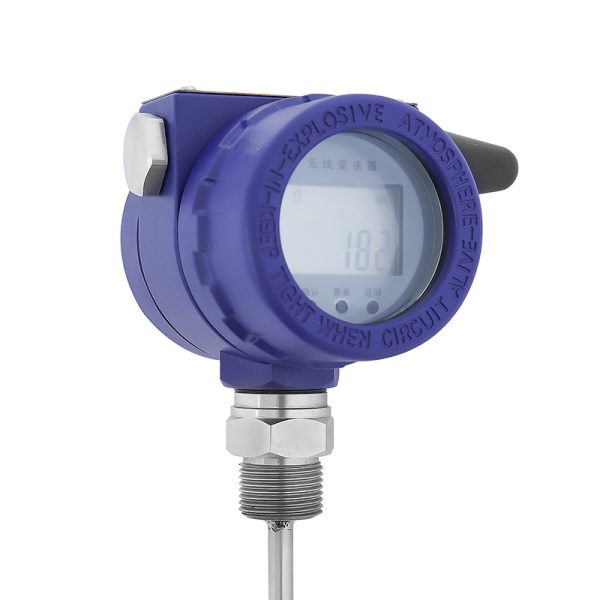
Accurate process control requires specialized field instrumentation. This technical guide focuses on Wireless Temperature Transmitter, analyzing key operating parameters, deployment considerations, and system integration strategies for engineering and procurement managers.
Technical Specifications
Sensor Element: Pt100 / Pt1000 RTD, Thermocouple
Temp Range: -200°C to +600°C
Wireless Distance: 3 – 5 km (Line of sight)
Cloud Protocol: MQTT / HTTP REST API
Core Engineering Considerations for Wireless Temperature Transmitter
-
Application-Specific Challenges
Deploying instrumentation for Wireless Temperature Transmitter requires addressing key field challenges related to multi-point thermal monitoring, RTD sensor accuracy, remote telemetry to MQTT cloud brokers. Ensuring correct sensor placement minimizes measurement drift and operational downtime.
-
Signal Transmission and SCADA Compatibility
-
Analog Output: Standard 4-20mA loop current with HART communication.
-
Digital Bus: Modbus RTU (RS485) for direct PLC connection.
-
Wireless Telemetry: Low-power LoRa / NB-IoT / 4G options for remote monitoring.
Field Installation and Calibration Best Practices
-
Physical Mounting: Ensure rigid mechanical connections to prevent vibration-induced signal noise.
-
Zero Point Calibration: Perform initial zero-point adjustment following physical installation.
-
Environmental Protection: Verify IP67/IP68 cable gland seals are properly tightened for outdoor operation.
Frequently Asked Questions (PAA)
Q1: What protocol is best for integration with Siemens or Honeywell PLCs?
Answer: Modbus RTU (RS485) and 4-20mA HART are the standard protocols supported for direct SCADA/PLC integration.
Q2: How often should field calibration be performed?
Answer: For standard process applications, annual zero and span calibration is recommended to maintain optimal measurement precision.
For technical selection, OEM custom design, or RFQs, contact the YunYi Instrument Engineering Team.
