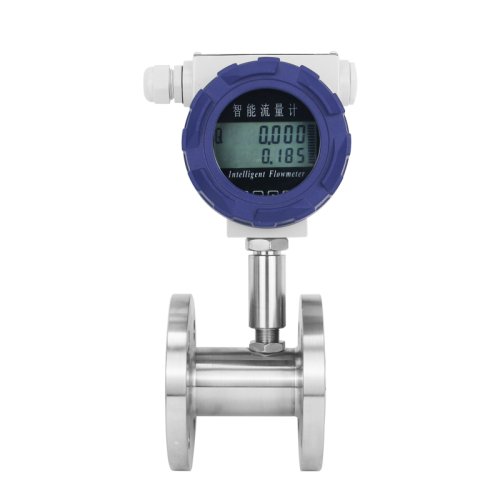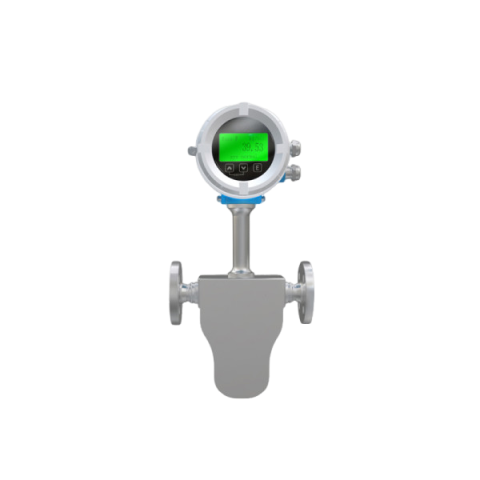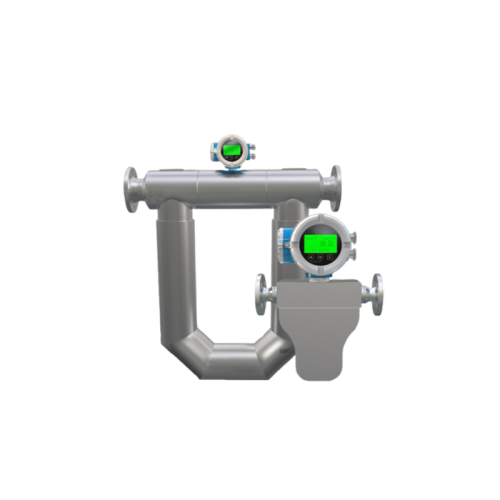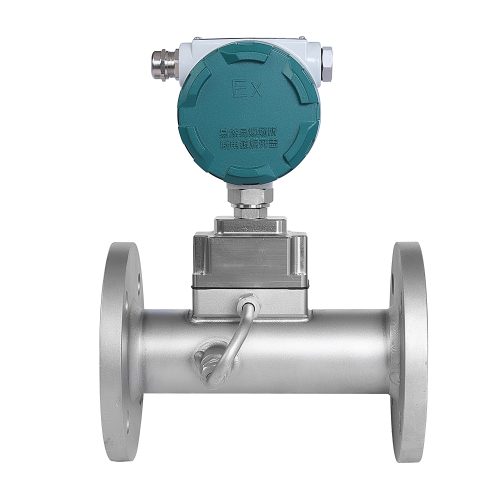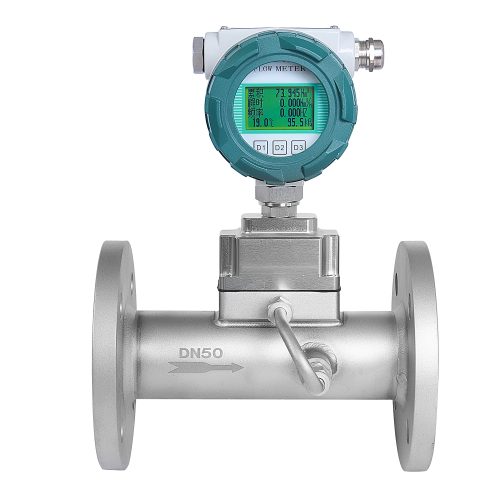


YUNYI gas turbine flow meter
Riding the Wind · Precision Measurement — The Gas Flow Measurement Specialist
YUNYI Gas turbine flow meters are velocity-type flow instruments, often referred to as the “high-performance speedometer” of gas measurement. Their operating principle is as follows: as fluid flows through the meter, it drives a precision turbine rotor to rotate. The rotor’s rotational speed is directly proportional to the fluid flow velocity (i.e., volumetric flow rate). High-sensitivity magnetoresistive or radio-frequency sensors detect the rotational speed, converting it into electrical pulse signals for output. This enables precise calculation of both instantaneous and cumulative gas flow rates. With its high accuracy, excellent repeatability, and superior response speed, it has become the preferred solution for critical applications such as natural gas trade metering and industrial gas measurement.

Product Advantages
The core value of gas turbine flowmeters lies in their unquestionable precision, exceptional reliability, and cost-effectiveness for large-scale flow measurement.
1. Trade-grade high accuracy: With accuracy classes as high as ±1.0% R or even higher, it serves as one of the legal metering instruments for natural gas trade settlement, ensuring fair transactions while minimizing measurement disputes and economic losses.
2. Wide Turndown Ratio: Features an exceptionally wide turndown ratio, typically reaching 1:20 or even 1:30, maintaining accuracy across extremely low to high flow ranges. This makes it ideal for applications with significant fluctuations in gas demand.
3. Excellent Repeatability: Exhibits minimal repeatability error (typically better than ±0.2%), ensuring consistent results under identical conditions. This delivers reliable and trustworthy data.
4. Rapid Response: Responds swiftly to flow changes, accurately capturing pulsating gas flows and rapid flow variations, making it suitable for process control requiring fast response.
5. Integrated Intelligent Temperature and Pressure Compensation: Built-in temperature and pressure sensors enable direct output of volumetric or mass flow at standard conditions (20°C, 101.325 kPa), eliminating the need for external transmitters and simplifying system architecture.
6. Digital Communication and Diagnostics: Supports pulse and 4-20mA outputs while integrating protocols like HART and MODBUS. Enables remote data retrieval, instrument self-diagnostics, and condition monitoring for predictive maintenance.
Core Application Areas
✅ Natural Gas Trade Settlement: Trade metering at city gas gate stations, transmission and distribution networks, and industrial energy entry points (compliant with international standards such as OIML R137 and EN12261).
✅ Industrial Gas Monitoring: Cost accounting and energy consumption management for plant utility gases including compressed air (CFA), nitrogen (N₂), oxygen (O₂), and argon (Ar).
✅ Gas Pressure Regulation & Metering Stations: Core instrumentation for regional metering or large-user measurement.
✅ Energy Management & Carbon Accounting: Provides precise gas consumption data for ISO 50001 energy management systems and carbon footprint calculations.
✅ Laboratories & Test Facilities: Serves as a standard meter for calibrating other gas flow meters.
| City Gas / Natural Gas | Gas gate stations, distribution stations, large industrial customers (e.g., power plants, major factories) for custody transfer and consumption metering | 1. Custody transfer accuracy – typically ±1.0% or better, meeting the requirements for fair billing between gas utilities and large‑volume users. 2. Wide turndown ratio – typically 1:10 to 1:20, accommodating significant flow variations between peak and off‑peak periods. 3. High repeatability – repeatability better than ±0.2%, ensuring long‑term consistency and reliability. |
| Oil & Petrochemical | Flare gas recovery, fuel gas distribution, associated gas metering, process gas flow monitoring | 1. High pressure capability – can handle system pressures up to 10 MPa or higher, suitable for natural gas production, transmission, and other high‑pressure applications. 2. Explosion‑proof design – available with flameproof or intrinsically safe electronics for hazardous areas with flammable gases. 3. Medium to large sizes – performs well in the DN50 to DN300 range, covering common industrial pipe sizes. |
| Industrial Gases | Compressed air, nitrogen, oxygen, hydrogen, argon – distribution and metering | 1. Fast response – reacts quickly to flow changes, ideal for intermittent use or applications with frequent flow fluctuations. 2. Wide flow range – available in sizes covering small to large flows, accommodating diverse gas demand levels. 3. Material options – oxygen‑compatible materials (oil‑free treatment) for oxygen service; special designs for light gases like hydrogen to improve low‑flow sensitivity. |
| Environmental & Energy | Biogas, coalbed methane, biomass gas, landfill gas – recovery and utilization metering | 1. High‑accuracy recovery metering – precise measurement directly impacts economic returns and carbon reduction accounting. 2. Pulse output capability – facilitates integration with control systems or remote monitoring platforms for automated data acquisition. 3. Corrosion‑resistant options – special materials or coatings available for gases containing corrosive components such as hydrogen sulfide. |
| Machine Integration & Testing | Gas engine test stands, burner fuel metering, gas flow calibration facilities | 1. High repeatability – when used as a reference meter or test stand sensor, excellent repeatability is critical for consistent test data. 2. Pulse output & totalization accuracy – high‑frequency pulse outputs enable high‑resolution metering for applications requiring precise totals. 3. Compact design – compared to other high‑accuracy flowmeters, turbine meters are relatively small and lightweight, making them easy to integrate. |
Technical Specifications
- Product Name: Gas Turbine Flowmeter.
- Instrument diameter:DN25~DN300.
- Accuracy level: 2.5,1.5, 1.0.
- Signal output: pulse/4-20mA.
- Power supply:+24VDC+15%/lithium battery/24VDC士15%+ithium battery.
- Measurement range: standard range or extended range.
- Instrument material:aluminum alloy or stainless steel.
- Explosion prooflevel: ExdllBT6、ExiallCT4.
- Protection level: lP65.
- Power consumption of the whole machine:< 1W.
- Installation method: flange installation.
- Medium temperature: -30 ‘C~80 ‘C.
- Environmental temperature: -30 °C~60 °C.
- Atmospheric pressure:86KPa~106KPa.
- Relative humidity: 5% to 95%.
- Measurement medium: low to medium flow rate gases such as.
Q1: What is a Gas Turbine Flow Meter and how does it measure flow?
A: A Gas Turbine Flow Meter is a high-accuracy, velocity-type instrument used for measuring the volumetric flow rate of clean gases. Its core component is a freely rotating turbine wheel placed in the gas stream. The velocity of the gas causes the turbine to spin at a rotational speed that is directly proportional to the volumetric flow rate. A magnetic or inductive pickup detects each blade pass, converting the rotation into a high-frequency electrical pulse signal for rate and totalization.
Q2: What are the primary strengths of Gas Turbine Meters?
A:
✅ High Accuracy at Medium-to-High Flows: Excellent linearity and accuracy (typically ±1.0% or better of reading) over a specified flow range, making it ideal for custody transfer and fiscal metering of natural gas and other gases.
✅ Wide Turndown Ratio: Offers a broad operational flow range (e.g., 10:1 to 100:1), accommodating varying demand within a single meter.
✅ Excellent Repeatability: Provides highly consistent measurement for precise process control.
✅ Fast Response Time: Reacts quickly to flow changes, suitable for dynamic processes.
✅ Compact & Cost-Effective: Often provides a high-performance solution at a competitive cost for line sizes from DN15 to DN300.
Q3: Where are Gas Turbine Meters commonly used, and for which gases?
A:
-
Core Applications: Natural Gas Transmission & Distribution, City Gate Stations, Industrial Gas Metering (N₂, O₂, Ar), Compressed Air Measurement, Gas Injection in Processes, Engine Test Stands, and Boiler Feed Gas Control.
-
Suitable Gases: Clean, dry, and non-corrosive gases such as:
-
Natural Gas / CNG
-
Nitrogen, Argon, Oxygen
-
Air (instrument or plant air)
-
Other inert or process gases
⚠️ Critical Requirement: The gas must be clean and free of liquids or particulates. Even minor contamination can damage bearings and degrade performance. An upstream filter/coalescer is mandatory.
-
Q4: How does it compare to other major gas flow meter types?
A:
| Aspect | Gas Turbine Meter | Rotary Displacement (Roots) Meter | Ultrasonic Flow Meter |
|---|---|---|---|
| Principle | Measures velocity (turbine speed). | Measures volume (fixed displacement). | Measures transit time of sound waves. |
| Best Accuracy Range | High at medium-high flows. Lower at very low flows. | Excellent across very wide flow range, especially low flows. | Very good across a wide range. |
| Moving Parts | Yes (turbine wheel on bearings). | Yes (meshing rotors). | No. |
| Pressure Loss | Moderate (depends on flow). | Low to moderate. | Negligible. |
| Upstream Pipe Requirements | Requires significant straight runs (10-20D). | Minimal straight runs needed. | Varies by model, but often required. |
| Key Strength | Cost-effective accuracy for high-volume, clean gas. | Unmatched rangeability for custody transfer. | No pressure loss, bi-directional, maintenance-free. |
Q5: What is “K-factor,” and why is temperature/pressure compensation essential?
A:
-
K-factor (Meter Coefficient): This is the number of pulses generated per unit volume of gas (e.g., pulses per cubic meter). It is unique to each meter and determined during flow calibration. The pulse total multiplied by the K-factor gives the actual volume at line conditions.
-
Temperature & Pressure (T&P) Compensation: A turbine meter measures actual volumetric flow at operating conditions. For custody transfer or process control, this must be converted to a standardized base volume (e.g., at 1 atm and 15°C). This is done by an electronic flow computer (corrective device) that uses inputs from integrated or remote T&P transmitters to calculate the corrected standard volume for billing or mass flow.
Q6: What are the key selection and installation considerations?
A:
Selection Checklist:
-
Flow Profile: Define minimum, normal, and maximum flow rates (in ACFH or Nm³/h). Ensure the meter’s specified range covers your needs.
-
Gas Data: Full gas composition, pressure, and temperature ranges.
-
Material Compatibility: Standard wetted parts are stainless steel. Special alloys for corrosive gases.
-
Pressure Rating & Loss: Confirm meter’s ANSI pressure class and ensure calculated pressure drop is acceptable for your system.
-
Output Requirements: Pulse output, 4-20mA analog, and digital communication (RS485/Modbus) for integration.
Critical Installation Rules:
-
Flow Conditioning: Install a high-quality filter/coalescer upstream.
-
Straight Pipe Runs: Crucial. Follow manufacturer specs (often 10-15 pipe diameters upstream and 5 downstream) to ensure a fully developed, swirl-free flow profile for accuracy.
-
Orientation: Usually horizontal, but verify with the model.
-
Calibration: Must be flow calibrated on air or a similar gas. The K-factor and linearity curve are programmed into the flow computer.
Q7: What about maintenance and long-term reliability?
A:
-
Primary Wear Parts: The turbine wheel bearings are the main wear component. Lifespan depends on gas cleanliness and operating speed.
-
Predictive Maintenance: Monitor the meter K-factor (from diagnostics) or bearing condition indicators. A shift in K-factor can signal bearing wear or blade damage.
-
Scheduled Service: Includes filter element replacement and periodic performance verification. Recalibration is recommended on a 3-8 year cycle, depending on service conditions and regulations.
-
Reliability: With proper filtration and within its specified flow range, it is a highly reliable and proven technology.
Q8: What certifications are important for fiscal gas measurement?
A: For legal-for-trade applications, meters and the complete metering system must comply with stringent standards:
-
International: OIML R137 (Gas Meters), ISO 9951.
-
Regional: EU Measuring Instruments Directive (MID), AGA Report #7 (for natural gas in North America).
-
Safety: ATEX / IECEx (hazardous areas), PED/CRN (pressure equipment).
Why Choose a Gas Turbine Flow Meter?
✅ Proven Accuracy for Clean Gas: A trusted, cost-effective solution for high-volume gas measurement.
✅ Wide Operational Range: Handles varying demand efficiently.
✅ Industry Standard: Widely accepted for custody transfer with a long history of use.
✅ Digital Ready: Seamless integration with flow computers and SCADA/PLC systems.